The Definitive Guide to the Best Time for a Yacht Charter in Raja Ampat
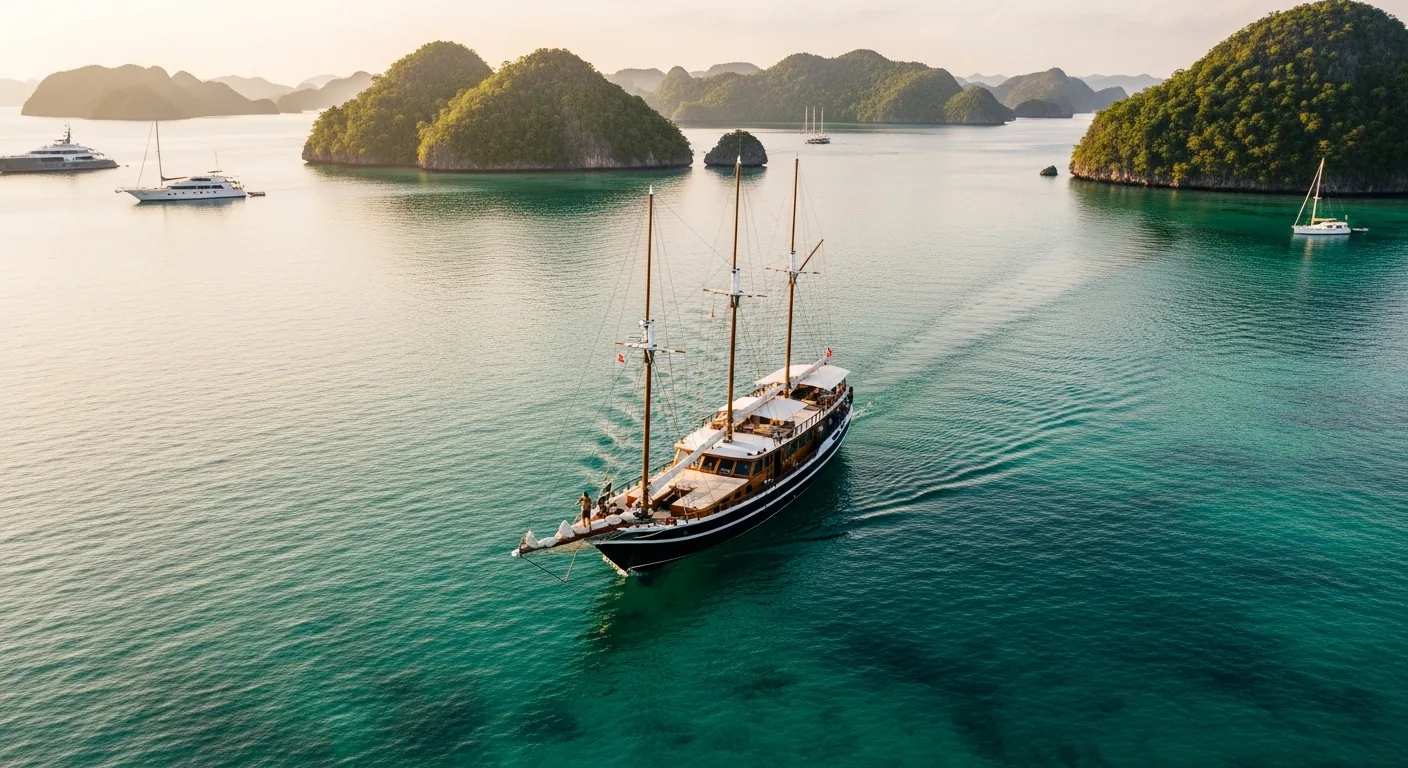
The phinisi schooner glides across a sea of impossible placidity, the water a sheet of polished turquoise reflecting the midday sun. To port and starboard, the iconic karst formations of Wayag rise from the depths, their limestone cliffs draped in emerald vegetation. The only sounds are the gentle lapping of water against the hull and the distant call of a Papuan hornbill. This is Raja Ampat, a destination that exists at the very edge of the modern map, and a private yacht is the only means to properly access its profound seclusion and biological wealth. Yet, the success of such an expedition hinges entirely on a single, critical factor: timing. See also: Yacht Charter Raja Ampat.
Navigating this remote archipelago, which comprises over 1,500 islands off the coast of West Papua, presents a distinct set of logistical and meteorological challenges. The primary question for discerning travelers and seasoned divers is not if they should experience this region, but when. An improperly timed Raja Ampat boat charter can mean contending with turbulent seas, compromised diving visibility, and impassable routes to its most celebrated locales. This guide provides the strategic intelligence required to align your travel with the archipelago’s most favorable conditions, ensuring your expedition is defined by discovery, not disappointment.
The Raja Ampat Charter Season: An October to April Deep Dive
The premier window for any serious Raja Ampat yacht charter falls between October and April. This period coincides with the northwest monsoon, which, contrary to its name, brings the driest weather and calmest sea conditions to the region. From the Dampier Strait to the northern islands of Wayag, the ocean surface often takes on a glassy quality, facilitating smooth passages between anchorages and providing the stable platform essential for diving, kayaking, and tender explorations. During these months, air temperatures consistently hover between 25-32°C (77-90°F), while water temperatures remain a welcoming 28-30°C (82-86°F), ideal for extended periods of underwater exploration without the need for heavy wetsuits. See also: Contact.
This seven-month span is considered the dry season. While brief, isolated showers can occur, they are typically short-lived and do little to disrupt planned activities. More importantly, the lack of significant wind and swell is what truly defines this period. It allows charter yachts—from the 50-meter phinisi Silolona to expedition-capable super-yachts—to safely navigate the intricate passages and access the secluded coves that make a Raja Ampat yacht hire so compelling. Dr. Mark Erdmann, a conservation scientist with decades of experience in the region, has repeatedly identified this period as optimal for observing the area’s megafauna. The clear, calm waters create perfect conditions for manta ray encounters at cleaning stations and improve the chances of sighting pods of dolphins or even the occasional Bryde’s whale.
Navigating the Peak Months: December to February
Within the broader dry season, the months of December, January, and February represent the absolute apex of charter conditions. This is the heart of the season, where the weather is at its most stable and the marine life at its most active. For divers, this is when visibility can extend beyond 30 meters, transforming renowned dive sites like Cape Kri into kaleidoscopic arenas of marine biodiversity. It was at Cape Kri where biologist Dr. Gerald R. Allen famously recorded 374 distinct fish species on a single tank dive—a world record that speaks to the area’s ecological significance. See also: Home pricing.
During these peak months, oceanic manta rays (Manta birostris) congregate in significant numbers at cleaning stations such as Manta Sandy and Manta Ridge. Charter itineraries are specifically designed around these predictable aggregations. “The predictability of marine encounters from December to February is exceptionally high,” notes a leading Indonesian dive guide with over 20 years of local experience. “The currents in the Dampier Strait are strong but clear, delivering a constant stream of nutrients that attracts everything from massive schools of fusiliers to wobbegong sharks.” This period commands premium pricing for a Raja Ampat charter yacht. A high-specification phinisi like the 65-meter Lamima can command upwards of $161,000 USD per week, while a luxury motor-yacht such as the 51-meter Dunia Baru charters for approximately $120,000 USD per week. Due to this high demand and ideal conditions, securing a vessel during these months requires booking at least 12, and often up to 18, months in advance.
The Strategic Advantage of the Shoulder Seasons: October-November & March-April
For travelers seeking a more exclusive experience, the shoulder months of October-November and March-April offer a compelling strategic alternative. These periods bookend the peak season and retain nearly all of its advantages but with a significant reduction in the number of other vessels in the water. The weather remains predominantly dry and the seas calm, though the chance of a brief, passing rain shower is slightly higher than in mid-January. This is a small concession for the heightened sense of solitude and discovery. See also: Yacht Fleet Raja Ampat pricing.
These months are particularly attractive for photographers and those with a flexible schedule. The quality of light during sunrise and sunset can be more dramatic, with scattered clouds adding texture to the sky. Marine life remains prolific; manta ray sightings are still a daily expectation, and the vibrant soft corals of the Misool region in the south are just as radiant. Chartering during the shoulder season can also present a value proposition. While the most sought-after yachts maintain their rates, there can be more flexibility in scheduling and occasionally a 5-10% price variance compared to the Christmas and New Year peak. A vessel like the 46-meter expedition yacht Salila, with its 10 cabins, might have greater availability, offering its charter rate of approximately $84,000 USD per week without the scheduling pressure of the peak season.
Raja Ampat Season Comparison
| Feature | Peak Season (December – February) | Shoulder Season (Oct-Nov, Mar-Apr) |
|---|---|---|
| Sea Conditions | Exceptionally calm, glassy surfaces | Generally calm, low probability of wind chop |
| Weather | Consistently dry and sunny | Mostly dry, higher chance of brief, passing showers |
| Manta Ray Sightings | Peak aggregation at key cleaning stations | Very high and consistent sightings |
| Yacht Availability | Extremely limited; book 12-18 months prior | Higher availability; book 6-12 months prior |
| Charter Pricing | Premium rates apply across all fleets | Potential for value, especially on select vessels |
| Exclusivity | Higher concentration of liveaboards and yachts | Fewer vessels, enhanced sense of isolation |
Itinerary Deep Dive: What Your October-April Charter Unlocks
The choice of season directly impacts the feasibility of your itinerary. The calm conditions from October to April are precisely what make the classic Raja Ampat yacht charter expedition possible, granting access to its three most critical regions.
First, the Wayag Islands in the far north. This archetypal landscape of conical karst islets is accessible only when the seas are tranquil. Navigating the narrow, labyrinthine channels to find the perfect private anchorage for your yacht requires calm water. Furthermore, the signature activity here—a strenuous but rewarding climb to the Pindito Peak viewpoint—is safer and more pleasant in dry weather. The stability of a charter yacht allows for easy deployment of tenders to reach the trailhead for this iconic ascent.
Second, the Dampier Strait. This channel separating the islands of Waigeo and Batanta acts as a funnel for the Indonesian Throughflow, creating nutrient-rich waters that support an explosion of life. Dive sites here, such as Blue Magic and Sardine Reef, are current-swept and best dived during the calm season for safety and maximum visibility. The currents are the engine of this ecosystem, and the calm surface conditions of the dry season allow dive tenders to safely drop and retrieve divers with precision. All visitors are required to purchase a Raja Ampat Marine Park Entry Permit, which costs IDR 1,000,000 (approximately $65-70 USD) and is valid for 12 months.
Finally, this season allows for seamless combination itineraries that can include the central region and potentially extend to the southern wonders of Misool. While Misool has a slightly different microclimate, the October-April window provides the most reliable conditions for a comprehensive charter exploring the full breadth of Raja Ampat’s geography without the risk of being weathered-in or facing rough, multi-day passages between the northern and southern zones.
The Off-Season: Why May to September Presents Challenges
Understanding the best time for a Raja Ampat boat charter also means understanding the worst. From roughly May to September, the southeast monsoon brings a dramatic shift in weather patterns. This period is characterized by stronger winds, consistent rainfall, and, most critically, significant ocean swells that can reach 2-3 meters or more. These conditions make open-water crossings uncomfortable and, at times, hazardous. For a luxury charter experience, this is simply untenable.
During these months, many of the premier northern dive sites and anchorages become inaccessible. The powerful winds and waves make tender operations for diving and shore excursions difficult and unsafe. Water visibility can also be compromised, dropping from a crystalline 30 meters to a more turbid 15 meters due to runoff and agitated sediment. Consequently, the majority of the high-end charter fleet, including phinisis and motor-yachts, either relocates to other parts of Indonesia, such as Komodo National Park, or undergoes annual maintenance. While a few specialized liveaboards may offer trips to the more sheltered southern region of Misool, the classic, all-encompassing Raja Ampat expedition is not a viable or pleasant option during this period.
Selecting Your Vessel for the Dry Season
The optimal season opens up all possibilities for vessel selection, allowing you to match the yacht to your specific expedition style. Each class of vessel offers a different way to experience the calm waters of Raja Ampat.
- Phinisi Schooners: These traditional Indonesian two-masted sailing vessels, handcrafted from ironwood and teak, are the most authentic way to explore the archipelago. Their broad beams provide exceptional stability at anchor, and their expansive deck spaces are perfect for dining and lounging. Vessels like the Prana by Atzaró (from $140,000 USD/week) and Amandira by Aman (pricing on request) merge heritage design with five-star service and amenities.
- Motor-Yachts: For those wishing to cover more territory or who prefer a more contemporary aesthetic, a motor-yacht is an excellent choice. They offer speed for longer passages and are often equipped with advanced stabilization systems. An expedition-style motor-yacht provides a platform for carrying a wider range of water toys, from jet skis to custom dive tenders.
- Super-Yachts: For the highest level of privacy, service, and comfort, a super-yacht charter is the definitive choice. Yachts such as the 73-meter M/Y Cloudbreak or the 86-meter sailing yacht Aquijo have previously charted these waters. Their advanced zero-speed stabilizers counteract any roll, ensuring complete comfort even when anchored in a gentle swell. They carry professional dive centers, gourmet galleys, and a crew trained to deliver an exacting standard of service.
Your Next Steps to a Raja Ampat Expedition
Timing is the foundational element of a successful expedition through Raja Ampat. By targeting the dry season from October to April, you ensure access to the region’s most extraordinary locations in the greatest comfort and safety. Planning ahead is non-negotiable for this caliber of travel.
To begin the process of securing your vessel and crafting a bespoke itinerary, we recommend the following actions:
- Define Your Ideal Travel Window: Decide between the absolute peak conditions of December-February or the enhanced solitude of the October-November and March-April shoulder seasons.
- Determine Your Group Size and Preferences: Consider the number of guests in your party and whether the timeless romance of a phinisi or the modern amenities of a motor-yacht better suit your style.
- Consult with a Charter Specialist: A specialist with direct, on-the-ground experience in Raja Ampat can provide current availability and match you with the ideal yacht and crew for your objectives.
- Secure Your Charter 12-18 Months in Advance: The world’s finest charter yachts are booked well in advance. Early commitment is essential to guarantee your first choice of vessel and dates.
To begin crafting your private Raja Ampat yacht charter, contact our specialists. We provide discerning advice and access to the region’s most exceptional fleet of phinisis, motor-yachts, and super-yachts.